
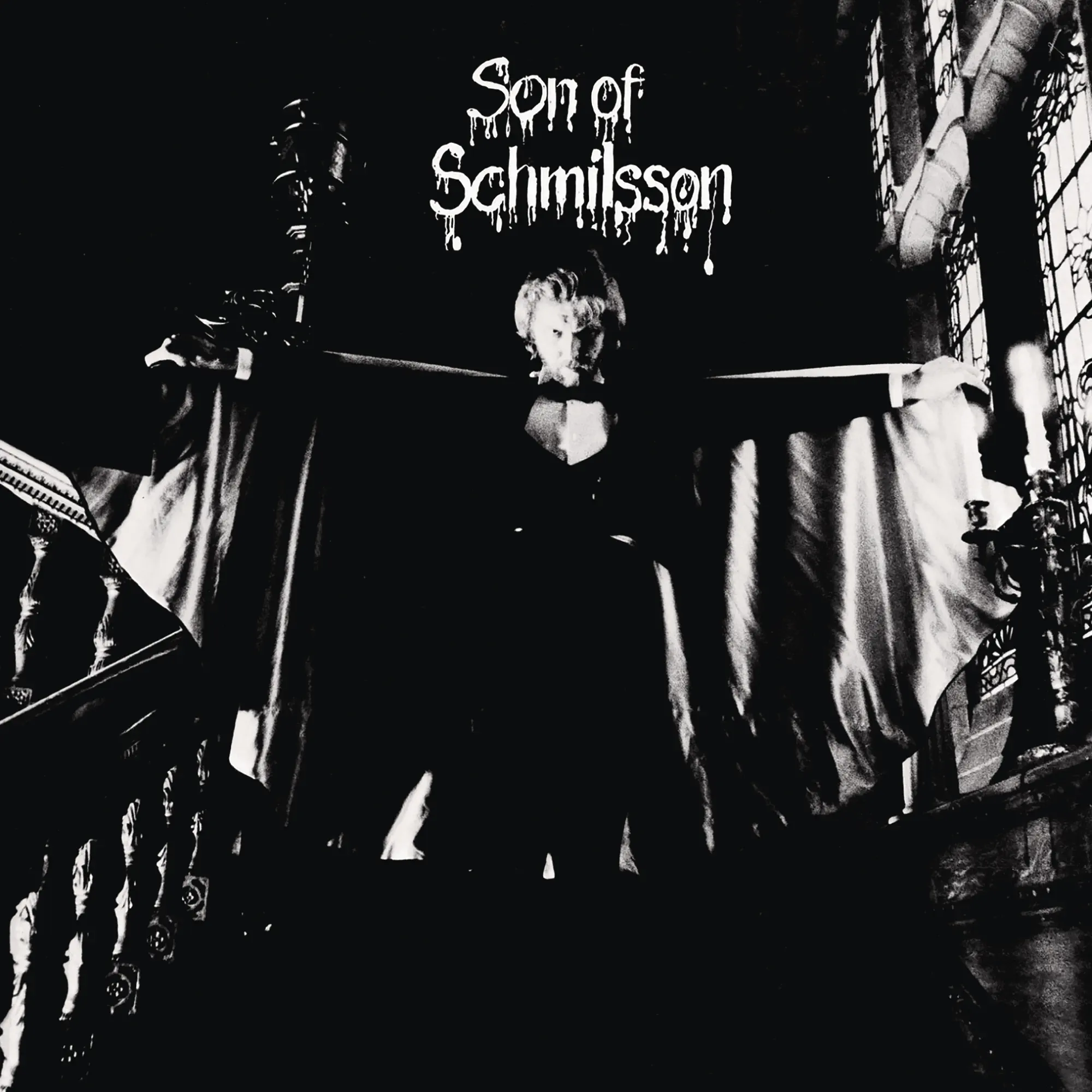
A freewheeling example of what you should do when your record company is pressuring you deliver more of the same from your last record.
You might not realize it, but you’ve definitely heard a Harry Nilsson song. Chances are, it was the cover of One that Three Dog Night took to number five on the charts in 1969. If you’re of a certain age and watched a lot of the original Muppet Show, you probably saw a skit set to Nilsson’s Coconut.1 You may also remember that song from an ad for the short-lived Coke with Lime.2 You might also remember a movie called The Point3 that occasionally ran during ABC’s Sunday night family-oriented programming block, that was all Nilsson. He was quite prolific as a musician, and yet I haven’t met a lot of people familiar with him.4 Thankfully, Harry Nilsson was one of my mom’s favorite (if not her favorite) musicians, and his music was played constantly in our house when I was growing up.
Before we get into the songs on this record, let’s talk about where it fits into Nilsson’s catalog. After the success of his previous record, Nilsson Schmilsson, there was a great deal of pressure for a repeat. After all, that record spawned three Billboard 100 hits,5 including the number one charting Without You.6 But a straightforward sequel is not what Nilsson created. Instead he delivered a freewheeling record that bounces between sincerity and irreverence, sometimes in the same song. This was the record (that much to his producer’s and label’s consternation) where Nilsson really let his bluntness and bawdiness shine through. And he did it with an amazing cast of players that included Peter Frampton, Ringo Starr,7 and George Harrison.8
One last note. This record has been part of my life as long as I can remember being aware of music. Nilsson was my Mom’s favorite artist, and this was one of her favorite of his records. It was on quite a bit around our house growing up.
Listening Notes and Track Breakdown
Take 54
Listening to this one as a kid, I’m I didn’t pick up on all the bawdiness throughout the lyrics. I knew it was about a singer trying to impress a woman, which is probably all I needed to understand at that age. Here’s how the song opens.
It was take 54 when she walked
through the door with the red light on it
I knew in a minute If I wanted to get in it
then I’d have to get on it
I sang my balls off for you, baby
I worked my fingers to the bone
I closed my eyes to get the high note
But when I woke up I was alone
Nilsson’s lyrics up to this point wasn’t always the most serious,9 but they definitely weren’t this blunt. Listening again later in life I can understand why this album alienated many of Nilsson’s more conservative fans.
Take 54 Outro
This isn’t technically it’s own track, but it’s worth calling out. It’s set up as if it’s a field recording of sorts and starts with a man snoring10 before waking up to an eerie voice11 repeating “Son of Schmilsson” over what could best be described as haunted house noises. I’m sure Nilsson had to fight to include it on the record, and I’m glad he won because it makes me smile every time I hear “RCA Records and Tapes! Mwahahahahahaha!”
Remember (Christmas)
After Take 54 and it’s outro, you might think this going to be an entirely unserious album. This song will knock that thought out of your mind. It’s a fairly straightforward ballad with Nilsson waxing nostalgic about remembering to focus on the good times.12 There’s also a very heavy sadness to the song:
Dream, love is only in a dream
Remember
Remember, things are never as they seem
Dream
As a kid, this was just a sappy song that I had to wait through13 to get to the rest of the “fun” songs that follow. As I’ve gotten older, I’ve come to love this song and the message that even if life is bad right now it won’t stay that way.
Joy
This was the third single from the album, though it wasn’t released as a Nilsson single. Instead RCA released it on their country imprint, Green, and credited the song to Buck Earle.14 Remember how I mentioned that this record bounces between sincerity and irreverence? This song encapsulates that perfectly. Musically, it’s a bit of a spoof on a typical (at the time) country and western ballad.15 The lyrics could best be described as a campy look at the ups and downs of a relationship, and most of them don’t read as very serious at all. But the third verse has always struck me as being strangely poignant:
Now, if you haven’t got an answer
Then you haven’t got a question
And if you never had a question
Then you’d never have a problem
But if you never had a problem
Well, everyone would be happy
But if everyone was happy
There’d never be a love song
I’d guess Nilsson intended that verse to be a bit of a joke, but I’d argue that the final couplet is a perfect description of pop music. Just think about how many great love songs have been written long after the relationship that inspired them ended.
One more note about this song, the last line “I want you to turn on your radio and listen to my song” is, on its own, a delightful image. But in the context of the album it makes for the perfect transition into the next song.
Turn on Your Radio
The set up from the last line of Joy makes it seem like this is going to be another of the irreverent songs on this album, but instead we get a soulful, sincere song about the end of a relationship. In the verses, Nilsson seems reflective and resigned to the fact that the relationship is over.
I don’t know where I’m goin’
Now that I am gone
I hope the wind that’s blowin’
Helps me carry on
Meanwhile, the choruses shift to more directly address his former partner:
Turn on your radio, baby
Listen to my song
Turn on your night light, baby
Baby I’m gone
I think this is Nilsson’s way of saying it’s over and if you want to know more you’ll have to listen to the record to understand why. But even after listening to this song on and off for most of my life, I’m not entirely sure.
But I am sure that I really appreciate the little production choices throughout this song that at times make it sound like you’re listening to Nilsson through the radio.
You’re Breakin’ My Heart
I only ever heard my mom say “fuck” twice in my entire life. Once when I was in sixth grade and our power had been out for three days in February. During a phone call to the power company looking for an update she lost her cool and bit and let a “fucking” slip out, completely reasonable if you ask me. The other time was once when she was singing along to this song and she let a “fuck” slip out during the opening line (which also happens to be the chorus):
You’re breakin’ my heart
You’re tearing it apart
So fuck you
It only happened once during that song, which is impressive considering that line repeats three times. The more amazing thing is that it only happened that one time, which is really surprising since we probably listened to this record hundreds of times growing up.
The song is likely about Nilsson’s recent separation with his then wife Diane. And I’d guess by that opening line that it wasn’t the most amicable process.
That opening line also caused Nilsson’s label, RCA Records, to be hesitant about including the song on the album. Thankfully, Nilsson won that battle and the world was gifted this rollicking little song about the dissolution of a marriage.
Spaceman
First things first, when I was a kid, this was my favorite song on this album, possibly my favorite Nilsson song.16 How could I not love it, it was a song about astronauts, and I was very much a kid who was into astronauts and space exploration. Did I pick up on the sadder undertones of the lyrics as a grade-schooler? Maybe a little, but all that really mattered was I got to listen to a song about an astronaut.17
I wanted to be a spaceman
That’s what I wanted to be
But now that I am a spaceman
Nobody cares about me
Hey Mother Earth, won't 'cha bring me back down
Safely to the sea
But ’round and around and around and around
Is all she ever say to me
Listening to this song today, I can’t help but focus on the melancholy nature of the lyrics. It’s gone from being a fun song about an astronaut to a lament from someone who has realized his dream is just another job at the end of the day. It’s important to remember the context of when this song was released in 1972. The world watched the Apollo 11 astronauts land on the moon. And Apollo 13 aside, by 1972 moon landings had become somewhat common, and much of the excitement of the space race was wearing off. It’s almost no surprise that Elton John released Rocket Man, a song with a similar space exploration as workaday sentiment, slightly earlier in the same year.18
The Lottery Song
On an album where the prevailing take on relationships tends towards the negative, The Lottery Song stands out for being so positive and joyous. The entire song is really just Nilsson dreaming about winning the lottery with his partner. Well, winning the lottery and going to Vegas.
There’s really not much else to say about this one, other than that it has one of the greatest gibberish choruses of all time.
Ooh loo loo loo loo loo
Ooh loo loo loo loo loo
Ooh loo loo loo loo loo loo
Ooh loo loo loo loo loo
Ooh loo loo loo loo loo
Ooh loo loo loo loo loo loo
That’s the entire first chorus. But with the beauty of Nilsson’s voice, and the pure delight throughout the rest of the song I couldn’t ask for anything more.
At My Front Door
Long ago, far away--
[Burp] Excuse me. [Laughter]
For the briefest of moments you might think we’re going to get a reprise of Remember Christmas. Instead, we get another bawdy song, this time with Nilsson singing about some sort of on-again/off-again relationship. Did I understand this song when I was younger? Absolutely not. But I enjoyed how raucous this song is. And I have to say, I still kind of feel the same way.
Ambush
Once I got a little older and learned about protest songs, I came to consider this Nilsson’s way of approaching an anti-war song.19 While I’m not entirely sure how to interpret the events in the song, it definitely feels like a description of something that might have occurred during the Vietnam War.
It starts clear enough, a group of soldiers are marching through the night, singing a song to keep up their spirits before coming under attack. The first chorus seems clear as well, and is really what gives me the impression that this is an anti-war song.
Now, we ain’t gonna sing that song no more
Ain’t gonna sing that song no more
Just don't pay to sing no more
Especially when you’re in a war
But what I still can’t get my head around is the line Nilsson sing-talks at the opening of the bridge, “Now, this time through, we want everybody to listen to the punchline!” It would be a morbid joke, but listening to the song again I can’t help but wonder if the “punchline” is that they’re all dead and that’s why they won’t be singing any more.
I'd Rather Be Dead
I’d rather be dead (I said dead)
Than wet my bed
Until I started writing this review, I had no idea that there was video from the recoding session for this song. In the video we see Nilsson leading a seniors choir through what has to be the most irreverent song ever written about death and aging. I’d love to know if the choir knew what they were signing up for before they arrived. From the look on some of their faces, I’m not sure they did.
Now that you’ve experienced this marvelous song it might surprise you that my mom told us she wanted us to play this song at her funeral.20 Now, I should tell you she told us this many, many times21 long before she was diagnosed with lung cancer. I think in addition to thinking that it would be funny to play this at an actual funeral, she understood that listening to this ridiculous, wonderful song would bring some levity to a dark time. In the end, we didn’t have a traditional funeral for my mom. Instead, we invited family and friends to join us at my parents’ house for a celebration of life. We did play this song though, and I’m sure she would have loved it.
The Most Beautiful World in the World
To me, the last song on the album is a perfect example of how Nilsson can blend sincerity and irreverence into a single three-minute pop song. On the one hand, right after the first chorus we get someone gargling and spitting.22 On the other, the lyrics seem to be a sincere expression of gratitude of the greater world around him.23
Your mountains when you’re mad
Your rivers when you're sad
And those deep blue seas
I love you for your snow
Your deserts down below
I love the way you wear your trees
In many ways, this song is a reprieve of the message from Remember (Christmas), and good reminder to find gratitude in the world and people around you.
The song is a great end cap to a wonderful album, encapsulating so much of what makes Nilsson a delight to listen to.24
- I’m not even sorry that the song will now be stuck in your head for the rest of time. ↩
- I remembered this ad, but had thought it was for Diet Coke. I’d completely forgotten that Coke had a lime version for a while in the early 2000s. ↩
- Seriously, track that one down and watch it, it’s a great story about overcoming prejudice and accepting everyone for who they are. ↩
- Seriously, in the 14 years that he was active between 1966-1980, Nilsson released 18 albums. ↩
- Without You, Jump into the Fire, and Coconut. ↩
- Nilsson’s highest charting song. ↩
- Credited as Richie Snare. ↩
- Seriously, look at this list of musicians. ↩
- See Coconut from his previous record. ↩
- I’m pretty sure that’s Nilsson’s producer, Richard Perry doing the speaking parts. ↩
- Definitely Nilsson channeling the son of Dracula character from the cover of the album. ↩
- I’m guessing that at least some of those good times might have been his childhood Christmases considering the way “Christmas” seems to act like a subject in the title and yet it isn’t mentioned in the song at all. ↩
- When we listened to whole albums like this it was on record. CDs, which would have allowed for an easy skip, were still relatively new, and we didn’t have a CD player in the house until much later. ↩
- I’d love to know more about this decision. ↩
- This makes the decision to release this under a pseudonym on RCA’s country label even weirder, it’s very clearly not an entirely serious song. ↩
- Although that’s a toss up with Coconut, which, as we've talked about already, had a great rendition on the Muppet Show that was very appealing to me then and now. ↩
- One other personal note, this was the song that I chose for the mother-son dance at my wedding. Admittedly not a traditional choice, but one I’d make again. I know my mom enjoyed that moment, and it was made even better by my mom’s surprise since I didn’t tell her ahead of time what song I’d chosen. ↩
- While I’ve come to like Rocket Man more as I’ve gotten older, I still think Nilsson’s Spaceman is the better song. ↩
- The anti-war movement was in full swing by the time this song was released. It’s also not unreasonable to think that Nilsson would have read or read about the Pentagon Papers detailing the full extent of the United States’ involvement in Vietnam. ↩
- She had the best sense of humor. Dark, sarcastic, wicked sharp. I like to think I got just a bit of that from her. ↩
- At least once my sister and I were old enough to understand that everyone eventually dies. ↩
- All tastefully recorded, of course. ↩
- Okay, the last few lines might fall on the irreverent side of things. ↩
- It’s also a literal end cap with Nilsson literally saying “So long, folks” as the song wraps up. ↩